
Reframing Financial Decision-Making: Geopolitical Risk, Resilience, and Agentic Systems
Takeaways from our Executive Exchange in London.
Introduction
For decades, nobody could explain why something about the 15th-century painting The Virgin and Child by Filippino Lippi just seemed off. It was beautifully crafted, yes — but the proportions were strange, the perspective skewed. The answer, when it finally came, was disarmingly simple. The painting was never meant to be viewed head-on. It was made to hang high in a chapel, its proportions calculated for the upward gaze of the congregation below. From the right angle, it was perfect.
It is, as Manas Chawla sees it, a near-perfect analogy for how most institutions approach geopolitical risk. Organisations tend to analyse the world from their own vantage point, then wonder why the picture looks distorted. "The critical jump," said Chawla, "is to look at political risk from the perspective of the actors involved, from the perspective of their intended audience."
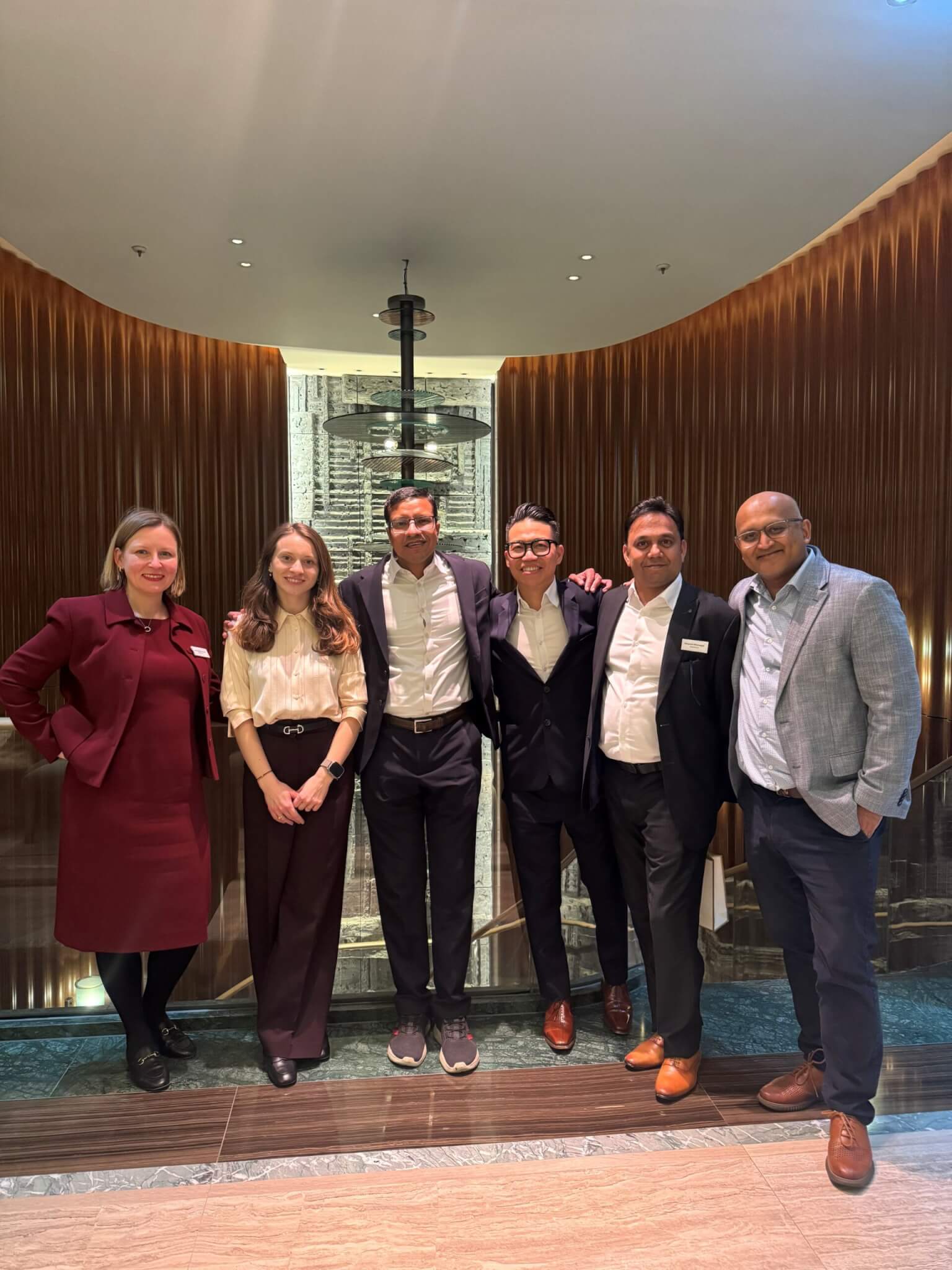
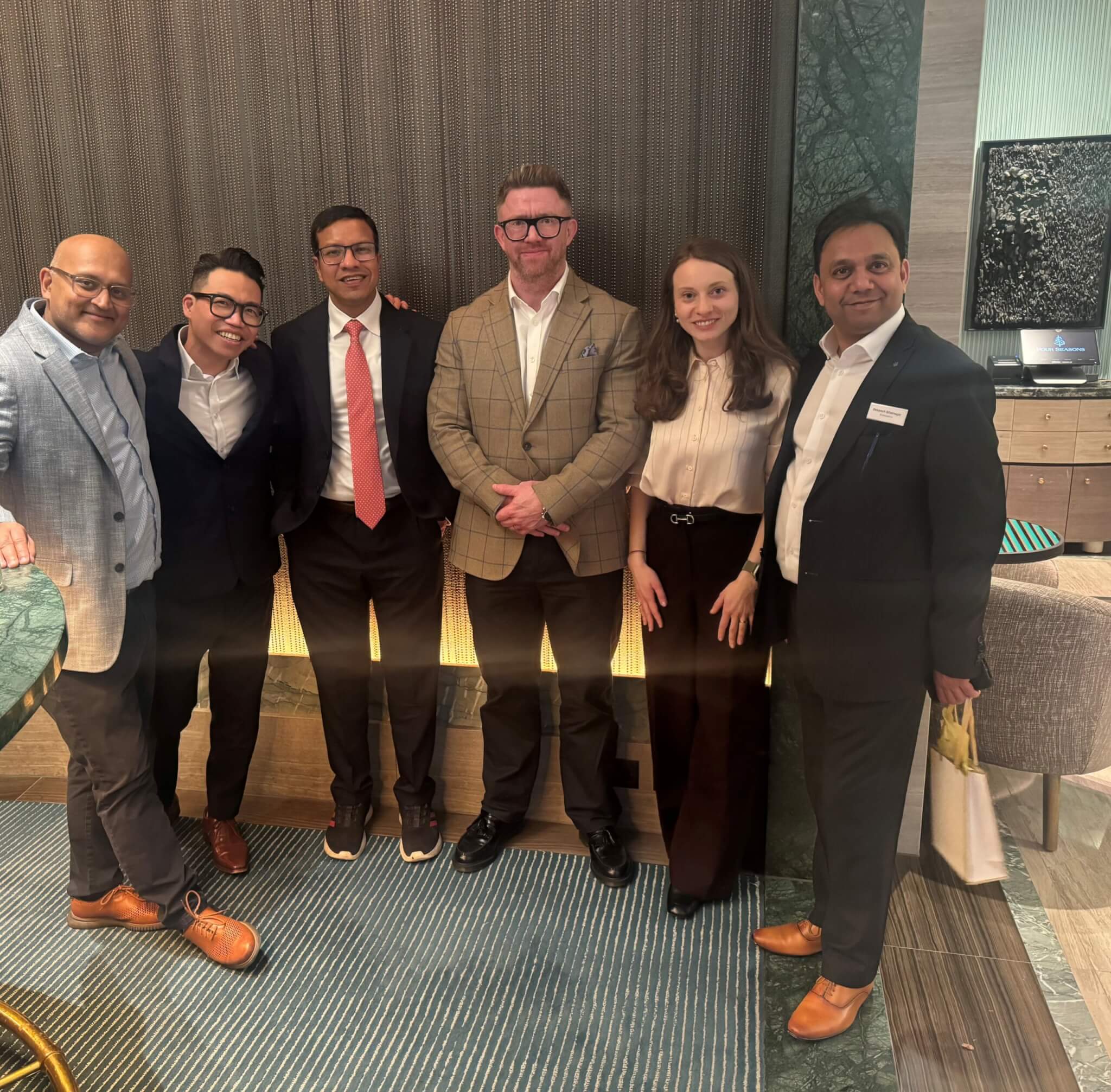
Chawla, CEO of the independent geopolitical advisory London Politica, was speaking on 18 March in London at Evalueserve’s Executive Exchange. The event brought together a small group of senior leaders across banking and private markets to discuss how the current geopolitical climate has reshaped investment conversations. Joining Chawla was the research director of a leading European private equity firm, offering a practitioner's perspective on what navigating that uncertainty looks like from inside a major institutional investor. The conversation that followed was both candid and wide-ranging, covering the mechanics of geopolitical risk, the hidden vulnerabilities in global supply chains, and what the rise of AI means for how financial institutions are built and run.
One thread ran through it all: the frameworks most institutions rely on were built for a world that no longer exists. The firms that will define the next decade are the ones willing to look at the picture from a different angle.
About the Guest Speaker

Manas Chawla
Manas Chawla is a political risk expert and the Founder of London Politica, the world's largest political risk advisory for social impact. He has advised heads of state, UN agencies, and a range of Fortune 500 companies on navigating geopolitical volatility. He is also the Director of the Oxbridge Diplomatic Academy.
An accomplished public speaker, Manas has delivered keynotes on geopolitical risk to leading decision-makers at conferences worldwide. He is also a regular commentator for a range of international news broadcast programmes, including CNN, BBC, CNBC, and Bloomberg. Manas holds an MSc from St Antony's College Oxford, and his PhD research at the LSE explores how Big Tech actors shape the geopolitical order of the twenty-first century.
Volatility Is Structural, Not Cyclical
Markets are designed to price in uncertainty. But how accurately can they price uncertainty that never resolves, that compounds across geopolitical, technological, and macroeconomic fault lines simultaneously, generating second and third order effects that no model anticipated? That is the challenge financial institutions are now confronting.
Manas Chawla put it plainly, "We're seeing a world where shocks don't just happen in isolation. They interact, amplify each other, and force us to question even our most basic assumptions." For financial institutions, that interaction effect is what makes this moment categorically different from previous periods of turbulence. It is not the intensity of any single shock that is new. It is the velocity at which downstream consequences materialise in places nobody was watching.
The practical evidence is already visible across the industry. Risk teams that once reviewed geopolitical exposure on a quarterly basis are now monitoring developments in real time, recalibrating positions as events unfold. Supply chains optimized for efficiency are proving brittle under pressure. Historical data, long the foundation of predictive models, is losing its reliability as a guide to what comes next.
Volatility is now woven into the fabric of financial services
The risks that prove most damaging are increasingly not the ones institutions prepared for, but the ones cascading quietly behind them.
The institutions navigating this most effectively are not necessarily those with the most sophisticated models but those that have accepted the new reality. Volatility is no longer a temporary deviation from stability, but the environment itself. Building for that reality, rather than waiting for conditions to normalise, is where the work begins.
New Frameworks For New Risks
"It's not enough to view political or technological risk from our own perspective. True resilience means we must understand the intentions and incentives of everyone involved in the system, even those whose goals seem to clash with ours." For Manas Chawla, this is not just a philosophical point. It is a fundamental critique of how most institutions approach geopolitical risk.
In a world shaped by volatility, nobody can see clearly. There is no single logical conclusion to any particular action, including how alliances will behave. The dominant framework most institutions rely on is the idea of a multipolar world, made up of distinct blocs of countries with broadly predictable allegiances and behaviours. Chawla’s view is that this framing is wrong, and that clinging to it produces a distorted picture. The world is not multipolar. It is multi‑aligned.
The distinction matters. In a multipolar world, you can map countries to blocs and make assumptions about how they will behave. In a multi-aligned world, those assumptions break down. Take India. It conducts significant trade with China while maintaining an active and hostile military situation on their shared border. It sources much of its energy and military equipment from Russia. It maintains strong political and defence ties with the United States. It champions the Global South, where Palestine is a defining cause. India cannot be strong-armed into a single position, and neither can Indonesia, Brazil, Saudi Arabia, or a growing number of what Chawla calls "geopolitical swing states." These are middle-power countries whose strategic positioning between larger powers gives them increasing influence, precisely because they refuse to be pinned down.
For financial institutions, the implication is that risk frameworks built on bloc logic will consistently misread the landscape. The more productive question is not which side a country is on, but what its actual incentives are, who it is answerable to, and how those relationships are likely to shift under pressure.
Even when scenarios can be mapped clearly, the downstream consequences those actions set in motion often remain obscured. Most institutions know that roughly 20 percent of the world's oil passes through the Strait of Hormuz. Fewer are watching the fact that a third of the world's seaborne fertilizer supply travels the same route, with profound downstream consequences for food security, inflation, and political stability that most financial risk models do not capture. The same logic applies to the level of individual businesses. An auto body repair company looks like a stable, predictable asset until you consider that autonomous vehicles will dramatically reduce accident rates, which changes the volume of repair work, which changes the economics of auto insurance, which changes the entire value chain the business sits within.
None of those consequences are visible if you only look at the asset head-on. This, Chawla argued, is the pattern: the risks that cause the deepest damage are rarely the ones dominating the headlines. They are the ones cascading quietly behind them, through supply chains, insurance markets, and commodity dependencies that nobody thought to stress test.
Creating Value Through Operational Resilience, Leverage, and AI
Private equity thrived in the era of low interest rates and expanding multiples. Financial engineering, leveraging cheap debt and riding valuation tailwinds, was enough to generate strong returns even from imperfect assets. In a higher rate environment, with market headwinds and geopolitical uncertainty compressing exit windows, that playbook no longer holds. As the PE Research Director put it, "When we have market headwinds, the only thing that protects our output is the operational improvement and operational development of our assets. And AI is a crucial component of that."
The first dimension is resilience, the ability to absorb disruption, adapt quickly, and scale capacity up or down as conditions change. In a volatile environment, the institutions that maintain an edge are those that can respond without being constrained by fixed cost structures or rigid operating models. That requires building organisations with genuine flexibility, where analytical capability, domain expertise, and execution capacity can be deployed rapidly in response to shifting conditions, then scaled back when the moment passes. Resilience, in this sense, is not just about withstanding shocks. It is about being structurally positioned to move robustly through disruption, faster than competitors.
The second dimension is leverage, doing more with the same or fewer resources. The PE Research Director leads the research and advisory function at a large European private equity firm, responsible for bringing external insight and analysis to investment teams across the business. His approach combines internal AI-driven self-service tools with external specialist partnerships, including a collaborative relationship with Evalueserve, to extend the team's capability without expanding its headcount. The result was a quadrupling of the internal business units served while keeping the team size flat. That is operational leverage in its most direct form, and it is increasingly what separates institutions building for the future from those still running on legacy operating models.
Managing AI Through Volatility
AI is reshaping financial services faster than most institutions can govern it. The promise is accelerated analysis, more efficient operations, and scaled growth. But the risks are equally real, and in a volatile environment they are further amplified. When the geopolitical or macroeconomic framework shifts, agentic AI systems trained on historical data and optimised for yesterday's conditions can become both a source of insight and a source of risk.
This is the governance challenge that sits beneath the surface of most agentic AI adoption conversations. The question is not whether to use AI and agentic AI. That decision has largely been made. The question is how to manage agentic AI systems whose underlying assumptions may no longer hold, whose outputs require active interrogation, and whose failure modes are not always visible until the damage is done.
The PE Research Director framed it in practical terms, "Your ability to question the output, tell me why you think that's correct, what sources did you use, those are the types of questions you'd ask a human being." That discipline, applying the same critical scrutiny to AI outputs that you would apply to a human analyst, is what separates institutions that are genuinely in control of their AI from those that have simply automated their blind spots.
The challenge is compounded in volatile conditions. As geopolitical frameworks shift, as new risks emerge in places models were not trained to watch, the gap between what an AI system assumes and what is actually true widens. Institutions that built models on the assumption of stable supply chains, predictable regulatory environments, or consistent counterparty behaviour are now discovering that those assumptions are embedded invisibly in their outputs. The model still runs. The answer still arrives. But the foundation it is built on has shifted.
The winners will be those who combine technological sophistication with deep sector knowledge and critical thinking.
Leading institutions are responding by treating agentic AI oversight as an ongoing operational discipline rather than a one-time implementation exercise. This means continuously stress testing agentic AI outputs against current conditions, maintaining human judgment at critical decision points, and building the kind of intellectual culture where questioning an AI recommendation is expected rather than exceptional. In a world where the ground keeps shifting, the institutions that will manage AI most effectively are those that never stop asking whether their models reflect reality, or the the biases built into their assumptions.
Rethink Your Workforce: People, Agents, Disruption
The question is not whether agentic AI can analyse, synthesise, recognise patterns, and form views. It absolutely can and will continue to expand its capabilities. But who is directing it, and toward what end? Without human experience and intention, AI optimises without purpose, producing volume without insight, analysis without judgment, answers to questions nobody asked in the first place, leaving the financial services industry at risk of drowning in AI slop.
This is reshaping workforce strategy across the industry. Domain expertise has become the most valuable asset a financial services professional can bring, not because agentic AI cannot crunch the numbers or surface the patterns, but because without someone who understands the field deeply enough to direct it, question it, and know what a good answer looks like, the output is just noise at scale. Eventually, your investment memos, equities reports, credit analyses will all start looking the same.
A telling example of the shift in workforce strategy comes from Bridgewater. The firm has fundamentally changed its hiring criteria, actively seeking out history majors, philosophers, and musicians alongside traditional engineering recruits.
The reasoning is that people who think laterally, ask unconventional questions, and can direct and prompt AI are generating better outcomes than those who follow purely technical paths. As Mangesh Patnaik, Senior Vice President at Evalueserve, put it, "We're now looking for people who think beyond the obvious, those who can prompt AI in new ways and approach problems from unexpected angles, not just follow traditional technical paths."
The PE Research Director echoed this. The critical skill in an AI-enabled organisation is not simply producing AI outputs but interrogating them, asking why a conclusion was reached, what sources were used, and where the assumptions might be wrong. That interrogation is only meaningful when it is grounded in experience. Domain expertise is what allows a professional to tell the difference between a genuine insight and a confident answer built on flawed foundations.
The institutions getting their workforce strategy right are thinking carefully about where in the workflow agents and agentic AI tools create the most value, and deploying them there with precision. The combination of human direction and AI execution, applied with discipline and domain depth, is what will define the most competitive financial services organisations of the next decade.
Conclusion
The throughline across the discussion was consistent. The old frameworks, whether for pricing geopolitical risk, creating portfolio value, governing AI, or building teams, were designed for a world of cyclical volatility and the eventual resolution of disruption. That world is gone. What has replaced it demands something different.
The firms that will define financial services over the next decade will not do so by predicting every shock or adopting every new tool. They will do so by building the institutional capacity to move with agility through disruption, think beyond the consensus, and deploy both human and artificial intelligence in ways that compound over time rather than cancel each other out.
Thirty senior banking and investment professionals are not going to solve geopolitical volatility or the governance challenges of agentic AI in a single evening. But they can reframe how they think about the problems at hand, pressure test their assumptions against the experience of peers, and leave with a wider lens than the one they arrived with.


Talk to One of Our Experts
Explore how Evalueserve can design, launch, and scale Agentic AI solutions customized for your business.