
AI adoption in the workforce is accelerating, but maturity remains elusive. While nearly 90% of organizations now report using AI in at least one business function, only about one-third have successfully scaled AI across the enterprise.
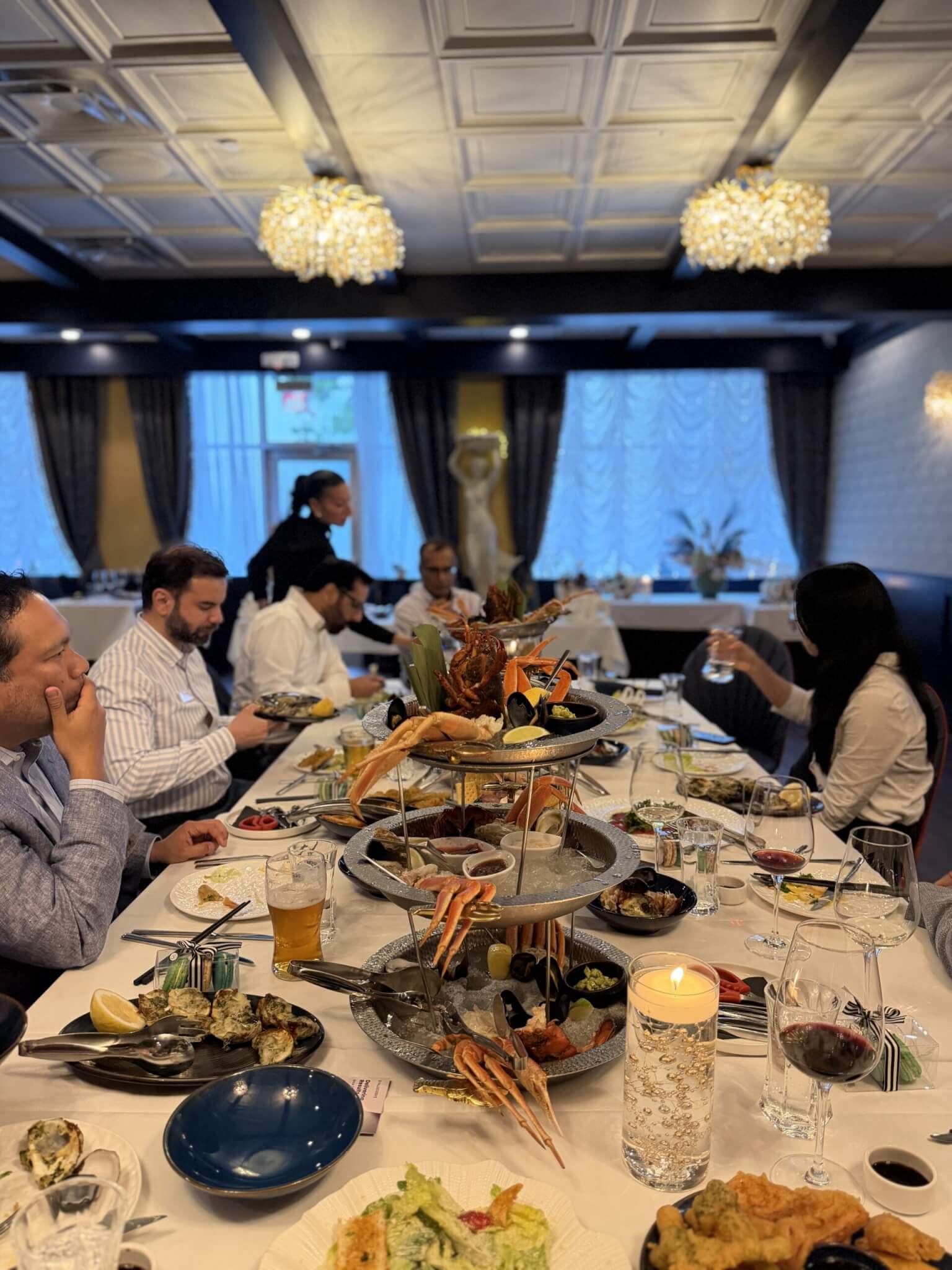
Evalueserve recently hosted an Executive Exchange dinner in Charlotte, bringing together senior leaders from banking and financial services for a candid, closed-door conversation on the future of AI in the enterprise. In our discussions with executives leading up to and during the event, a clear theme emerged: AI interest is high, but so is uncertainty. How should organizations implement AI in their workforce? How can leaders balance AI-driven efficiency with safety, security, and regulatory requirements? How do organizations govern AI at scale without slowing innovation?
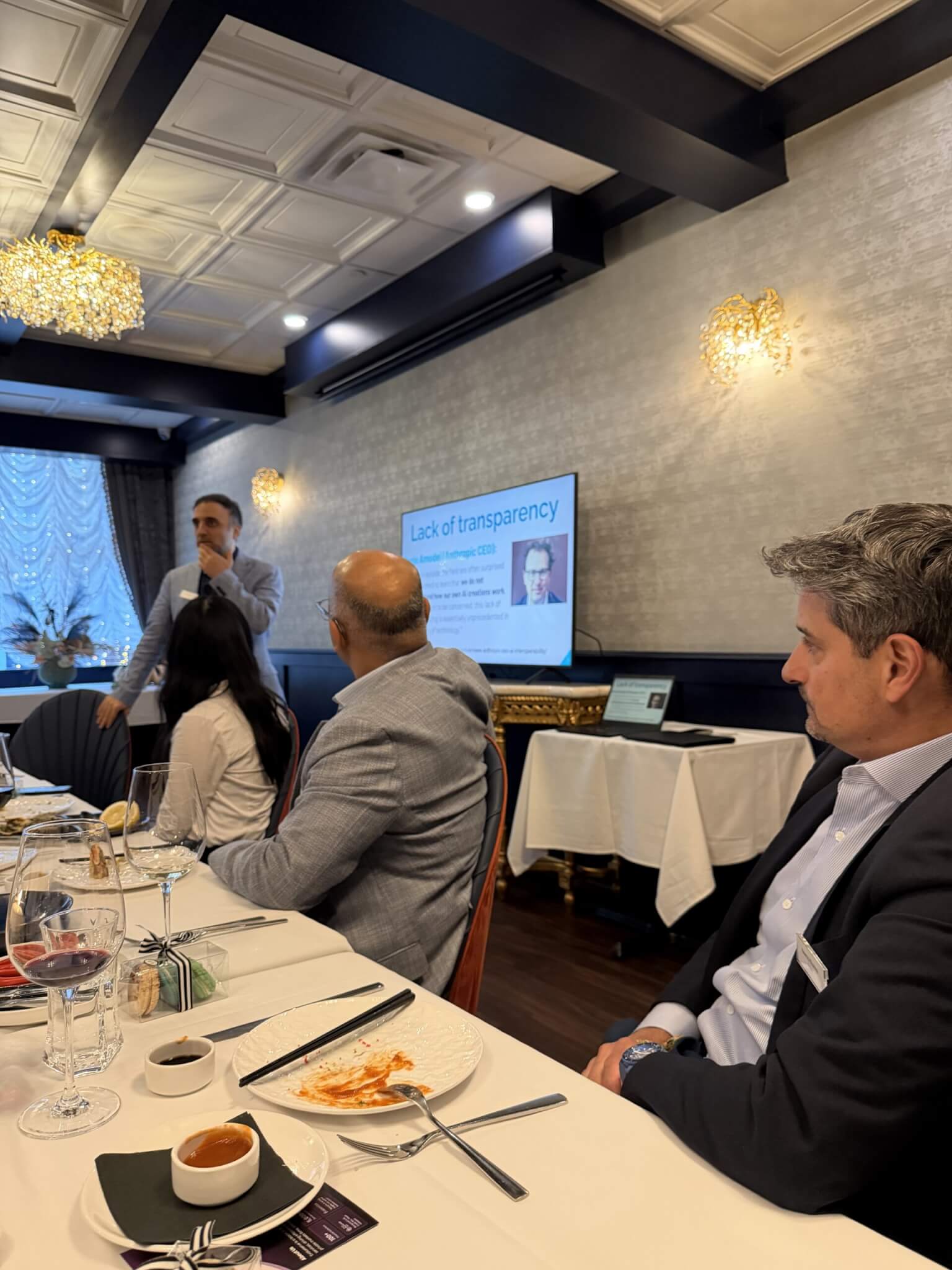
Against this backdrop, the evening featured a thought-provoking presentation and discussion led by Dr. Mohammad Hossein Jarrahi, Professor at UNC–Chapel Hill’s School of Data and Information Sciences and a leading researcher on AI and the future of work. Drawing on years of academic research and real-world case studies, Dr. Jarrahi challenged common assumptions about AI-driven automation and offered a more nuanced path forward; one centered on human–AI symbiosis.


Moving Beyond the Automation Narrative
Dr. Jarrahi began by framing the current debate around AI as a clash between two dominant narratives: techno-optimism and techno-skepticism. One side sees AI as an almost limitless efficiency driver. The other side sees it as a source of risk and disruption. Most leaders, however, sit somewhere in between, navigating between enthusiasm and skepticism as AI moves closer to core workflows. Many attendees echoed this view, asking how organizations should guide their teams forward when uncritical optimism and outright resistance are both barriers to effective AI adoption.
According to Dr. Jarrahi, both camps often talk past one another and oversimplify AI’s real impact on organizations. A particularly persistent narrative, he noted, is the idea that AI’s primary value lies in full automation, using algorithms to replace human work entirely in the name of efficiency and scale. While this approach has succeeded in narrow, repeatable processes, Dr. Jarrahi argued that it becomes far less effective in complex organizational environments where informal relationships, contextual judgment, and exception handling play a critical role.
He illustrated this with examples from knowledge work, emphasizing that roles deemed “replaceable” on paper are often deeply embedded within informal networks that help organization’s function. Removing these roles can inadvertently weaken collaboration, morale, and long-term effectiveness, even if short-term efficiency gains appear attractive.
Reframing the Future: Human-AI Symbiosis
Rather than viewing AI as a substitute for human intelligence, Dr. Jarrahi proposed an alternative vision: human–AI symbiosis. In this model, humans and AI are not competitors, but complementary partners contributing distinct strengths.
AI excels at processing vast amounts of data, identifying patterns, and operating at speed and scale. Humans, meanwhile, remain essential for problem framing, ethical reasoning, contextual judgment, and decision-making under uncertainty, especially in situations where historical data is limited or unprecedented events emerge.
The COVID-19 pandemic served as a powerful illustration: while AI systems struggled due to the lack of historical precedent, human leaders were required to make rapid, judgment-based decisions in ambiguous conditions. According to Dr. Jarrahi, this dynamic will only become more common as organizations face accelerating change.
Key Questions Leaders Should Be Asking
Dr. Jarrahi closed with a challenge to executive leaders: the most important AI strategy question is not “What can we automate?” but rather “How should work be divided between humans and machines?”
Answering that question requires organizations to:
- Recognize different types of intelligence and strengths
- Design workflows that intentionally combine human judgment and AI capabilities
- Invest in upskilling and reskilling alongside technology deployment
- Treat AI as a collaborator embedded within organizational systems, not a standalone solution
Looking Ahead
The Charlotte Executive Exchange reinforced a critical takeaway for leaders navigating AI transformation: successful adoption depends as much on organizational design and human capability as it does on technology itself.
By shifting the conversation from replacement to symbiosis, Dr. Jarrahi offered a pragmatic framework for leaders seeking to harness AI’s benefits while preserving the human insight that drives resilient, adaptive organizations. For banks, where trust, risk management, and regulatory accountability are paramount, this balance between human judgment and AI capability will be central to scaling AI responsibly across core workflows.
Evalueserve looks forward to continuing these closed-door conversations with senior leaders across global financial hubs as part of our Executive Exchange series.
About our Executive Exchanges
Evalueserve’s Executive Exchange events provide an unparalleled opportunity for senior executives to connect, share insights, and explore innovative ideas in a relaxed setting over dinner and drinks. Hosted in global business hubs such as New York, Toronto, and London, our exchanges feature engaging expert-led discussions on trends such as digital transformation and AI.
These intimate, invitation-only dinners are carefully curated around key industries including banking, private markets, life sciences and healthcare, technology, and more.



Why Evalueserve
Get in touch today to find out about how Evalueserve can help you improve your processes, making you better, faster and more efficient.